
Hester Park Cleaning up the Canning Project
What is it?
The City of Gosnells is receiving $1,135,000 in funding to deliver three important ecological restoration works along the Canning and Southern Rivers, with on-ground projects taking place at South of Corfield, Hester Park and Anaconda Drive. These projects will be delivered over the coming years, with completion scheduled around May 2028. Together, they form part of the broader Cleaning up the Canning initiative – a collaborative effort designed to protect and enhance our local waterways, strengthen wildlife habitat, and improve the quality and connectivity of our green spaces for the community.
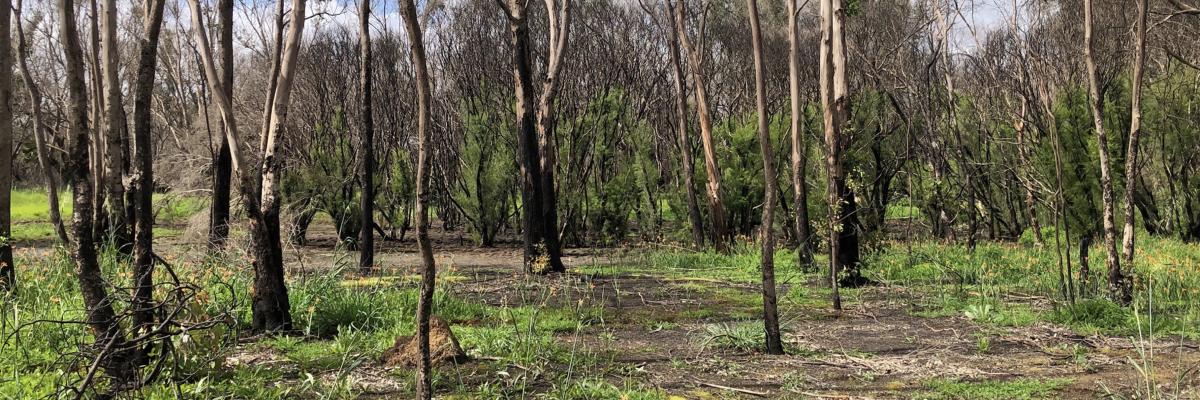
Hester Park is located along the southern bank of the Canning River between Nicholson Road and Roe Highway, within the suburb of Langford. It forms a large, continuous section of river park within an expansive, relatively flat floodplain, though the riparian zone is currently degraded.
A flora survey was undertaken at Hester Park to assess vegetation communities, overall condition and weed abundance. The findings helped identify priority areas for this project, alongside the impacts of a fire that occurred in early February.
Targeted control of woody and annual weeds has already begun. This work will remove invasive species, reduce competition, and create space for revegetation using endemic species. The first year’s planting event (2026) will be through the City’s National Tree Day Event. The aim is to improve vegetation condition, enhance habitat and biodiversity values, stabilise banks, and improve water quality entering the Canning River. As part of the project, Marri (a primary food source for Black Cockatoos) and Flooded Gum (Moitich, a secondary food source) will be planted, along with Melaleuca species and a diverse native understory. This will provide benefits for a wide range of native fauna and flora.
Overall the project will strengthen connectivity between Hester Park and the downstream remnant vegetation within the Canning River Regional Park.
Hester Park Restoration Project key points
• Sites selected based on ecological priorities and long-term restoration value
• Targeted removal of Declared and prominent weeds
• Tubestock planting of native species to restore site condition
• The project enhances habitat for Black Cockatoos and supports a diverse range of native wildlife
Why it matters?
Habitat fragmentation and loss is prevalent through both the City of Gosnells and the wider Perth area. Together, these projects will improve the health and resilience of our local waterways, supporting water quality, stabilising riverbanks, and enhancing surrounding vegetation. They will also play a vital role in protecting threatened wildlife, including Black Cockatoos, by expanding and reconnecting essential habitat. These efforts will help restore and strengthen the natural green corridors that link our parks and river systems, creating healthier environments that will support both biodiversity and the community, now and into the future.
This initiative is funded by the Australian Government's Urban Rivers and Catchments Program and delivered in partnership with the Cities of Armadale, Canning, and Gosnells, the Town of Victoria Park, South East Regional Centre for Urban Landcare (SERCUL), Whadjuk Aboriginal Corporation, Armadale Gosnells Landcare Group, Water Corporation, and the Department of Biodiversity, Conservation and Attractions.

 Subscribe to our eNewsletters